Cheers and Beers SVG Design
As someone who’s stitched over 200 custom embroidery projects — from boutique aprons for craft breweries to baby onesies for beer-loving parents — I opened the Cheers and Beers SVG Design zip file with quiet curiosity, not hype. This isn’t just another “beer lover” graphic. It’s a mood, a moment, a small celebration rendered in clean vector lines — and how it translates to thread matters more than any file format listed.
A First Stitch Tells You Everything
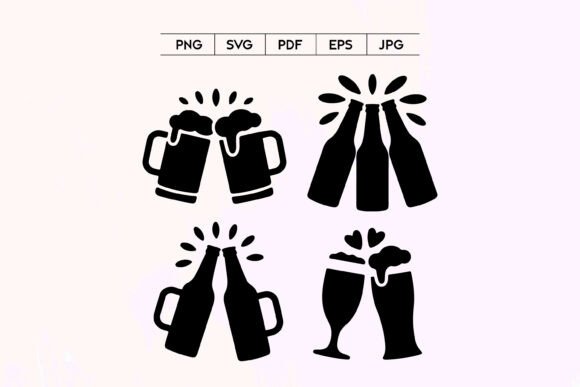
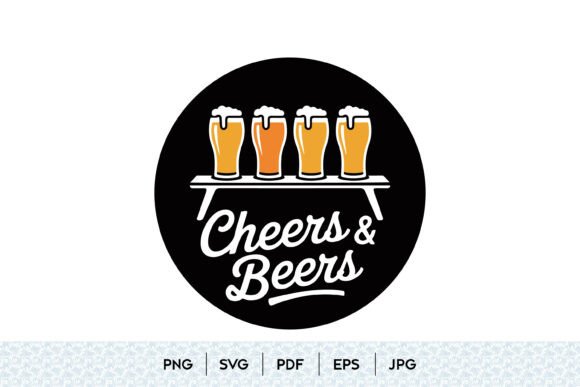
The design lands with warm, approachable energy: two raised pint glasses clinking, bold “Cheers!” arcing above, “Beers” nestled below in friendly, slightly rounded lettering. No clutter, no tiny hops or barley stalks competing for attention. That simplicity is its strength — and its first real test. I immediately pictured it on a heavyweight cotton tote bag for a local taproom’s merch line. Not as a background print, but centered, crisp, and proud — about 4.5 inches wide. That’s where this design shines: as a confident focal point, not filler.
Where It Stitches Like a Pro (and Where It Asks for Patience)
In real-world embroidery, Cheers and Beers SVG Design holds up beautifully on stable, medium-weight fabrics. I tested it on a navy sweatshirt using standard tear-away stabilizer and medium-density fill stitches — the glasses retained their shape, the letterforms stayed legible even at 3.75", and the overall balance felt generous, not cramped. It worked equally well as an embroidered patch (heat-seal backing applied cleanly) and on a linen tea towel, where the slight texture added charm without swallowing detail.
But let’s be practical: this isn’t a one-size-fits-all machine embroidery design. On thin or stretchy fabric — say, a lightweight unisex tee — the open negative space between the glasses and text needs extra stabilization. Without it, you’ll get puckering around the “C” and “B”, especially if your stitch density leans heavy. And on dark fabric? Test your thread colors early. The design’s clean outlines rely on contrast — a creamy off-white thread on charcoal works; pale yellow can disappear.
Fabric & Form Matter More Than File Formats
You’ll receive PNG, JPG, EPS, SVG, and PDF files — great for mockups, sublimation, or digital resale — but remember: none of those guarantee embroidery readiness. An SVG file isn’t automatically a digitized embroidery file. If you’re planning to stitch it yourself, you’ll need to digitize it properly or source a pre-digitized version. I’ve seen too many Etsy sellers list “SVG included” only to find their customers struggling with stitch mapping, underlay, or pull compensation.
For caps or curved surfaces, scale down to 3" or less — the letter spacing tightens nicely, and the glasses retain proportion. For baby embroidery? It reads perfectly at 2.5" on a onesie chest — cheerful without being overwhelming. Just avoid dense satin-stitch fills on knit onesies; opt for smooth running stitch outlines or light fill instead. And if you’re making holiday embroidery gifts — think cozy flannel pillow covers or denim jacket backs — this design adds instant personality without looking seasonal or dated.
What Customers Actually Notice (and Remember)
Here’s what I’ve learned from customer feedback over six years: people don’t buy “beer SVGs.” They buy *feeling*. A gift that says, “I know your favorite Friday ritual.” A shop item that signals community, not just consumption. Cheers and Beers SVG Design delivers that tone honestly — it’s friendly, inclusive, and quietly confident. It doesn’t shout “craft beer snob”; it smiles and says, “Grab a seat.” That builds trust. That makes a handmade product feel intentional, not generic.
That impression carries into your brand. If you’re an Etsy seller or small shop owner, consistency matters. This design fits naturally alongside other relaxed, lifestyle-oriented assets — think mugs, greeting cards, or printable wall art. But it won’t pair well with ultra-minimalist or highly technical branding. Know your lane.
Five Must-Do Checks Before You Stitch or Sell
- Test on scrap fabric first — especially if using textured weaves or blends. See how the lettering settles and whether glass rims stay sharp.
- Review stitch density — high-density fills may overwhelm lightweight fabrics or create stiffness on apparel. Adjust underlay and top-stitch settings accordingly.
- Confirm hoop size compatibility — the design’s natural width suggests a 5x7" hoop minimum for best results. Smaller hoops require careful scaling and repositioning.
- Inspect corners and curves — zoom in on the inner arcs of the glasses. Are anchor points smooth? Do sharp turns risk thread breaks or skipped stitches?
- Verify licensing for commercial use — since this falls under Illustrations and Graphics, confirm whether resale of finished embroidered products (e.g., tote bags, patches) is permitted, and whether redistribution of the digital embroidery file is restricted.
Final Thought: It’s Not Just Beer — It’s Belonging
This design succeeds because it’s rooted in human connection, not just iconography. As a machine embroidery design, it’s adaptable — scalable for a cap, balanced for a pillow cover, clear enough for a baby embroidery project. As a digital embroidery file, it’s versatile — useful for printable mockups, craft fair signage, or layered branding assets. But its real value lies in how it lands: warm, recognizable, and genuinely joyful.
If you’re choosing Cheers and Beers SVG Design for a custom apparel run, a boutique product line, or a personalized gift, you’re not just adding graphics — you’re inviting people in. Just make sure your stitching honors that intention. Test. Refine. Then raise a glass — and stitch it well.