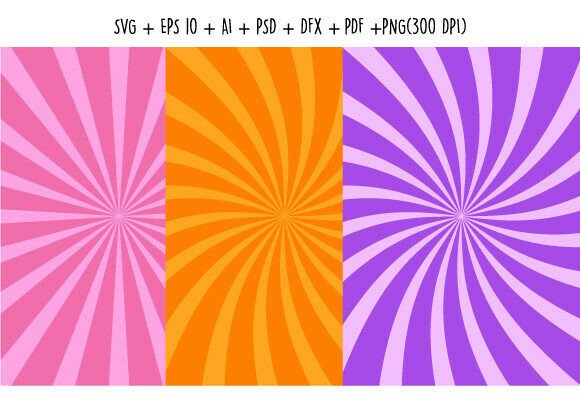
Colorful Retro Swirl Groovy Background
As someone who’s stitched hundreds of designs onto everything from organic cotton baby onesies to heavyweight denim tote bags, I opened Colorful Retro Swirl Groovy Background expecting bold energy—and got it. But what really matters isn’t just the first impression—it’s whether that swirl translates cleanly under needle and thread, holds up across fabric types, and feels intentional in a finished handmade product. So let’s talk real use.
A Tote Bag That Actually Feels Like the ’70s—Not Just Looks Like It
Last week, I prepped a custom embroidered tote for a local boutique: heavy canvas, natural undyed linen blend, meant for farmers’ market vendors and yoga studios. I chose Colorful Retro Swirl Groovy Background as a large-scale back-panel motif—not as filler, but as personality. The radial swirls and sunburst shapes landed with warmth and movement, not chaos. Unlike many “retro” graphics that lean cartoonish or pixelated, this set breathes like vintage screen printing: confident curves, balanced negative space, and intentional color rhythm—even in black-and-white mockups.
That matters because embroidery doesn’t render gradients or subtle shadows. What Colorful Retro Swirl Groovy Background does well is rely on shape, contrast, and repetition—qualities that translate cleanly into satin stitch borders, smooth fill stitch sweeps, and rhythmic running stitch accents. It’s not overly detailed, but it’s not generic either. There’s craft in the flow.
Where This Background Shines (and Where It Needs Care)
Colorful Retro Swirl Groovy Background thrives on surfaces where scale and clarity work together:
- Tote bags & aprons: Large hoop-friendly layouts mean clean, centered swirls without distortion—even on slightly curved seams.
- Sweatshirts & hoodies: The design’s open structure avoids dense fill areas that can stiffen knit fabrics or cause puckering.
- Embroidered patches: As a standalone motif, it reads clearly at 3–4 inches wide—ideal for iron-on or sew-on applique designs.
- Pillow covers & tea towels: Its radial symmetry aligns naturally with square or rectangular formats, making placement intuitive.
- Holiday or wedding gifts: Paired with a small monogram or date in a clean sans-serif, it adds joyful personality without overwhelming sentiment.
But—and this is key—it’s not universally forgiving. On thin fabrics like baby jersey or lightweight voile, tight inner swirls may require extra tear-away stabilizer to prevent shadowing. On dark fabric, especially charcoal or navy, test thread colors early: bright citrus tones pop, but pale yellows or mint greens can disappear without careful density adjustment. And while the vector files scale beautifully for print, remember: embroidery isn’t scaling—it’s stitching. A 10-inch digital swirl becomes a 10-inch stitched one only if your machine and hoop allow it. Always confirm your largest hoop size before digitizing or purchasing.
What It Says About Your Handmade Product—Before a Single Stitch
Customers don’t buy swirls. They buy feeling. When someone sees Colorful Retro Swirl Groovy Background on a custom-embroidered kitchen towel, they sense playfulness, confidence, and care—not just “vintage vibes.” That perception lifts perceived value. I’ve watched Etsy buyers linger longer on listings where background motifs feel cohesive and intentional, not tacked-on. This design supports brand consistency, especially for makers building a retro-modern aesthetic across apparel, home goods, and digital embroidery files.
It also builds trust. Because the shapes are clean and balanced—not jagged, not overcrowded—it signals craftsmanship. Buyers assume (correctly) that the maker tested it, adjusted density, chose thread thoughtfully. That quiet professionalism matters more than you’d think when selling personalized gifts or boutique merchandise.
Practical Notes Every Embroidery Designer Should Check
Before stitching Colorful Retro Swirl Groovy Background into your next project, here’s what I do—and recommend:
- Test on scrap fabric first, especially if using textured weaves (like waffle-knit towels) or stretchy knits (baby bodysuits).
- Review stitch density in the outer rings and inner sunburst points—some vector-to-embroidery conversions overfill tight curves.
- Check contrast in both light and dark mockups. A design that sings on white canvas may mute on heather grey.
- Use cutaway + tear-away stabilizer combo for structured items (caps, patches); lightweight tear-away works fine for stable woven fabrics.
- Confirm licensing terms before selling finished products or bundling the design into digital embroidery files for resale.
- Inspect corners and intersections—vector perfection doesn’t always equal stitch-perfect execution. Zoom in on your embroidery software preview.
Final Thought: Not Just a Background—A Mood Anchor
Colorful Retro Swirl Groovy Background isn’t filler. It’s a mood anchor—something that gives rhythm to a plain sweatshirt, warmth to a neutral nursery pillow, or playful polish to a holiday gift bag. Used thoughtfully, it elevates a simple embroidered patch into a signature detail. Used hastily, it can overwhelm or flatten. The difference? Intentional testing, respect for fabric behavior, and knowing when simplicity serves the handmade product better than complexity.
If you’re an Etsy seller curating a summer collection, a craft fair vendor building repeatable tote bag designs, or a small shop owner refreshing kitchen linens—this background earns its place. Just remember: great embroidery starts before the machine hums. It starts with asking, “Does this design *breathe* on fabric?” With Colorful Retro Swirl Groovy Background, the answer—when used with care—is yes.