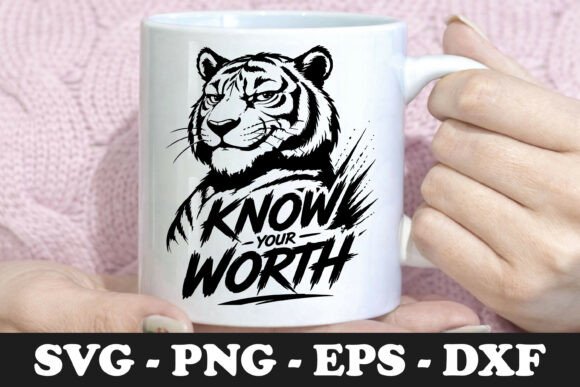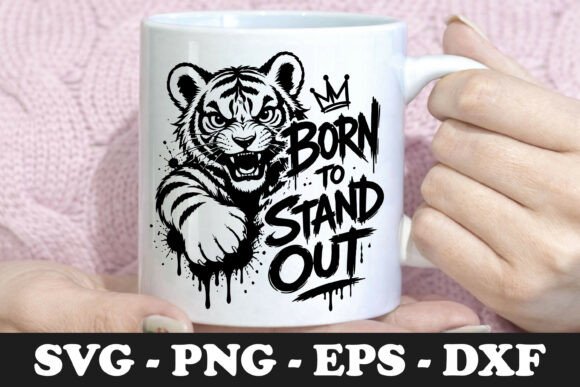
Born to Stand Out Tiger SVG Mug
First Impressions: Bold, Playful, and Instantly Recognizable
When I opened the Title Born to Stand out Tiger SVG Mug files, my eye went straight to the tiger’s confident gaze—stylized but full of character, with clean outlines and a balanced composition that reads well even at small scale. It’s not hyper-realistic, and that’s its strength: this is an illustration built for impact, not anatomical precision. The “Born to Stand Out” text wraps neatly around the tiger’s head like a subtle crown—neither cramped nor overbearing. As a designer who regularly selects embroidery assets for client projects, I immediately saw its potential on a relaxed-fit unisex sweatshirt or a sturdy cotton tote bag meant for weekend markets.
A Real-World Test: Embroidering This Tiger on a Linen Kitchen Towel
Last week, I prepped a batch of linen tea towels for a local boutique’s spring collection—and chose Title Born to Stand out Tiger SVG Mug as the centerpiece. Why? Because it’s got just enough detail to feel intentional (those whiskers, the slight curve of the tail), but avoids the trap of over-engineered fill areas that bog down stitch time or bleed on absorbent fabric. I used medium-weight cutaway stabilizer, 40-weight rayon thread in warm amber and charcoal, and stitched at 7.5" hoop size. The result? Crisp satin-stitched edges, smooth fill stitch transitions, and zero puckering—even across the towel’s natural weave texture. Customers loved how the tiger felt both spirited and handmade—not mass-produced.
Where This Design Truly Shines
- Custom apparel: Works beautifully on crewneck sweatshirts and structured caps—especially when placed front-and-center above the pocket or on the left chest.
- Personalized gifts: Paired with a monogram or birth year, it elevates baby onesies, nursery pillows, and holiday stockings without looking juvenile.
- Craft business merchandise: As a digital embroidery file, it scales cleanly from 3" patches to 8" tote bag motifs—ideal for Etsy sellers bundling multiple sizes.
- Printable mockups & digital previews: The included 300 DPI PNGs hold up in product listings, and the SVG/EPS/DXF variants let designers prep for laser cutting or vinyl layering if expanding into mixed-media kits.
Where to Proceed With Care
This isn’t a one-size-fits-all machine embroidery design. Its personality demands thoughtful execution:
- Small hoop sizes: Below 4", the tiger’s facial details (especially the eyes and mouth curve) risk losing clarity. I’d skip anything under 3.5" unless simplifying manually.
- Stretchy or thin fabric: On lightweight jersey or baby rib knit, use tear-away + light cutaway combo and reduce stitch density slightly—dense fill areas can stiffen the drape.
- Dark fabric backgrounds: The design relies on contrast. On navy or charcoal, test thread colors first—cream or gold works better than white for warmth and visibility.
- Curved surfaces: For caps, avoid placing the full motif across the front panel’s seam line. Center the tiger’s face over the flat front panel instead.
- Frequent-wash items: While the layout is stable, avoid dense satin borders on toddler bibs or dish towels unless you’re using high-retention thread and reinforcing backstitching.
How It Shapes Perception—Before and After Stitching
As a reviewer who’s seen hundreds of digital embroidery files, I pay close attention to how a design influences perceived value. Title Born to Stand out Tiger SVG Mug lands with confidence—not loud, not ironic, but quietly assured. That tone transfers directly to the finished product. A customer buying a tiger-embroidered apron from your shop doesn’t just get utility; they get identity. That matters for small shop products, Etsy listings, and boutique branding where authenticity competes with algorithmic noise.
It also supports brand consistency. Whether you’re selling embroidered patches as standalone collectibles or integrating the tiger into a seasonal line (think “Wild Spring” kitchen sets or “Fierce First Steps” baby bundles), the illustration holds its voice across formats—SVG for web previews, EPS for vector scaling, DXF for CNC prep, PNG for social ads.
Practical Designer Notes You’ll Actually Use
- Always test on scrap fabric first—especially if pairing with textured weaves like canvas or terry cloth.
- Check thread color contrast before stitching on dark or heathered fabric. What reads bold on screen may mute in thread.
- Review stitch density in your embroidery software. If fill areas look overly tight, adjust density by 5–10% for breathability on apparel.
- Confirm hoop size compatibility—this design fits standard 5x7" hoops comfortably, but verify your machine’s max dimensions.
- Inspect small details at 200% zoom: whiskers, inner ear lines, and letter spacing all need clean vector paths to translate well to stitch.
- Test black-and-white mockups to gauge silhouette strength—this tiger passes with flying colors.
- Compare light vs. dark background previews to guide your listing photos and packaging palette.
- Use proper stabilizer: medium cutaway for knits, tear-away for stable wovens, and fusible + cutaway for lightweight linens.
- Verify licensing before selling finished items or bundling the files—you’re responsible for commercial use rights, even with “high quality” labeling.
Final Thought: A Design That Earns Its Place
Title Born to Stand out Tiger SVG Mug isn’t flashy wallpaper—it’s a considered graphics asset with clear intent. It respects the craft of embroidery while speaking directly to buyers who want charm with substance. Whether you're a seasoned apparel decorator building a signature line or a hobbyist launching your first Etsy shop, this tiger doesn’t ask you to work around it. It invites you to build *with* it—thoughtfully, confidently, and always ready to stand out.